Invisible Doesn’t Make It Any Less Lethal
Luna (Spain) shares her experience of being diagnosed with psoriasis at 14, and the invisible battle that followed — one that affected not only her skin, but her mental health and sense of self. Content note: This letter discusses chronic illness, mental health, and experiences of emotional distress, including references to suicidal thoughts.
Luna (Spain)
4/1/20262 min read

Ten years ago, my life changed in a way I didn’t understand. What started as "tiny red dots" became an 8-year battle—not just against my skin, but against my own mind.
I’m sharing this because some conditions are invisible to the naked eye, but that doesn’t make them any less lethal.
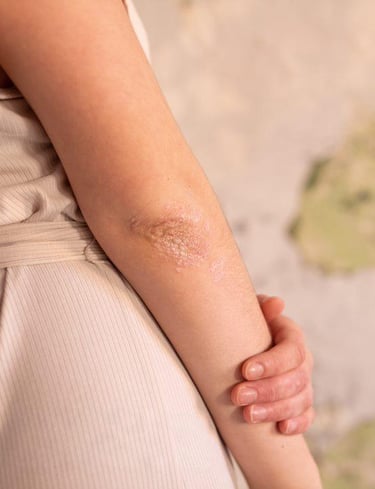
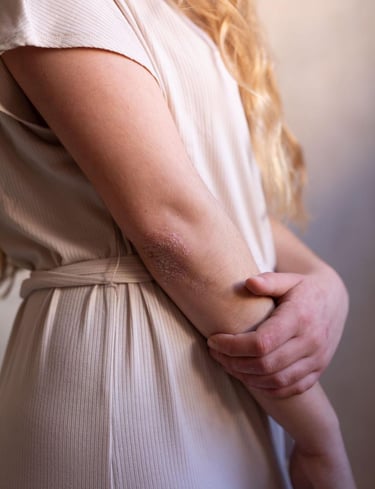
I still remember it as if it were yesterday, even though more than ten years have passed. I woke up after a New Year’s Eve, and I ran to my mom because I had a rash all over my body. My torso was covered in tiny red dots, like little raindrops. They didn’t itch or hurt, but as a 14-year-old girl, it was frightening.
We rushed to the emergency room of the nearest hospital. I was diagnosed with an allergic reaction and was prescribed a cream. “Great, I’ll recover soon.” At least, that’s what I thought.
But after a few days, the dots multiplied. They got bigger. We booked an appointment with my pediatrician. She listened to my story and stated: “That’s not an allergy. That’s psoriasis.”
“It’s a chronic condition. It’s treatable, but it has no cure.”
At 14, I didn’t fully understand what that meant. Why did I have to deal with this?
Over time, I understood that this meant a lot for my future.
It meant years of uncertainty, trial and error, and treatments that didn’t work.
Psoriasis affected my skin, but more importantly, it affected my mental health. Or did my mental health affect my psoriasis?
To this day, I'm still not sure. Psoriasis meant pain, constant itching, and physical discomfort.
But there was also frustration, exhaustion, and a growing sense of resentment to my own body.
The emotional distress was so intense that I stopped caring about the treatments and started looking for a way out. I didn't just want the itching to stop; I wanted everything to stop. People would look at me and say 'at least it's not something serious'.
Of course, psoriasis wouldn't kill me. My own mind, fueled by the pain, almost did.
Some of us live with conditions that remain invisible to the naked eye, but that doesn't make them any less lethal.
Health is not just what you can see on the surface.
My skin is mostly clear now, but I still carry the memory of the girl who almost didn't make it out of that battle.
Taking invisible suffering seriously isn't just about empathy—it’s about keeping us alive.
-Luna (Spain)
Living with Psoriasis Guttata

Content note: This letter discusses chronic illness, mental health, and experiences of emotional distress, including references to suicidal thoughts.
Enhancing quality of life for young people with chronic skin and joint conditions across Europe through advocacy, education, and community support.
© 2026. All rights reserved.